Command of the sea
He could calm or agitate the sea, turning a voyage into a passage of protection or consequence.
01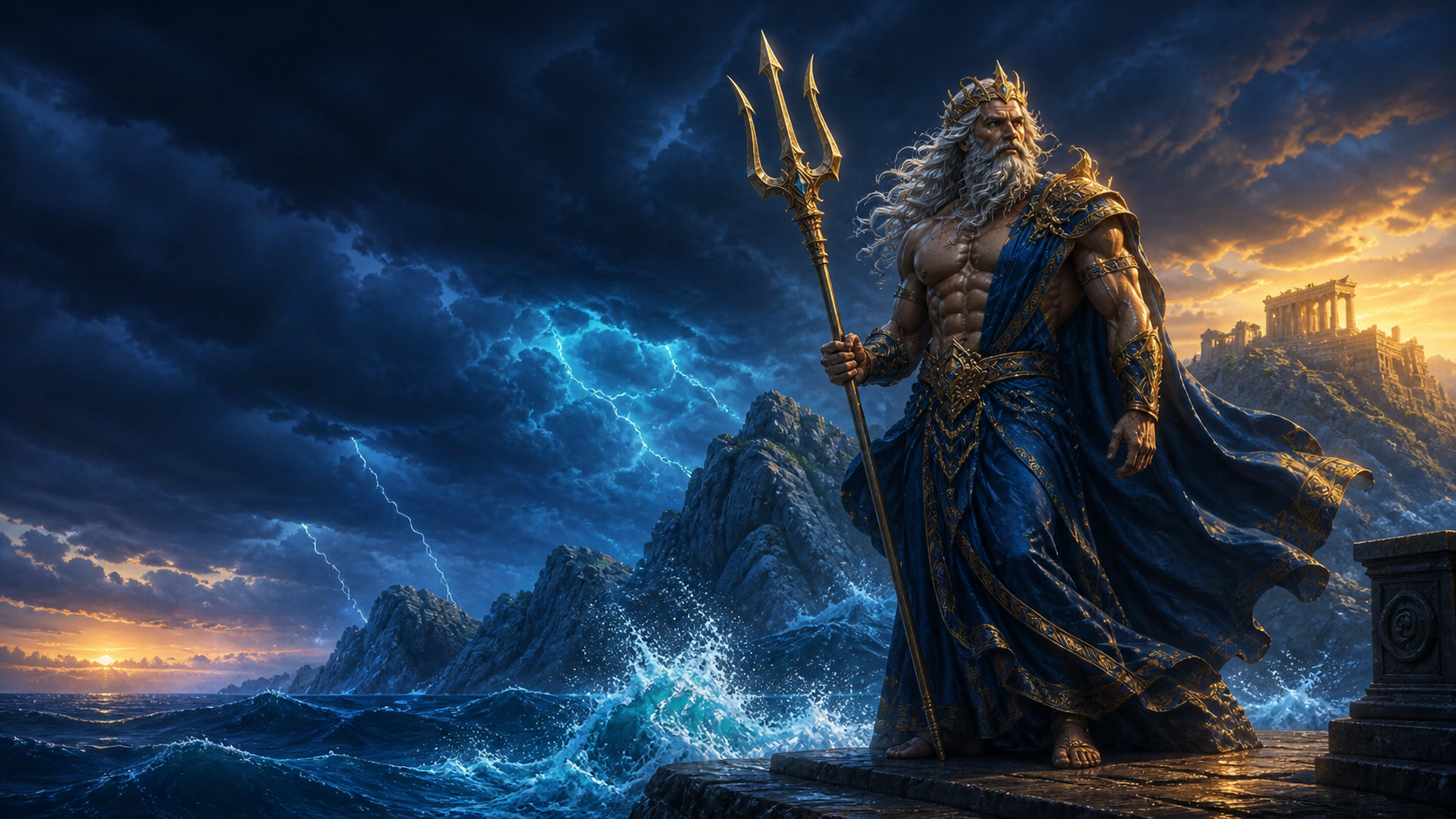
A source-aware Greek myth atlas
Sea ruler. Earth-shaker. Horse lord.
The trident and waves point to Poseidon—not Zeus. This is an original modern interpretation, not a film still or ancient artifact.
Beyond “water control”
Poseidon’s authority joins the rolling surface of the sea, the hidden pressure beneath the earth, and the muscular rhythm of horses. Ancient poets did not publish a fixed list of superhero abilities. His powers emerge through different stories, places, titles, and conflicts.
Six mythic currents
The layout moves like water: each current overlaps the next, and several domains meet inside a single symbol.
He could calm or agitate the sea, turning a voyage into a passage of protection or consequence.
01Epic traditions connect his anger with violent weather and dangerous crossings.
02The epithet Ennosigaios ties Poseidon to earthquakes and unstable ground.
03Myths associate him with the animal’s creation, mastery, breeding, and chariot power.
04A strike can shake earth, split rock, call water, or announce divine authority.
05He enters stories about walls, sacred contests, civic honour, and disputed patronage.
06“Power in Greek myth is not a game mechanic. It is a relationship between a god, a place, a story, and the people telling it.”
Atlas reading principle 01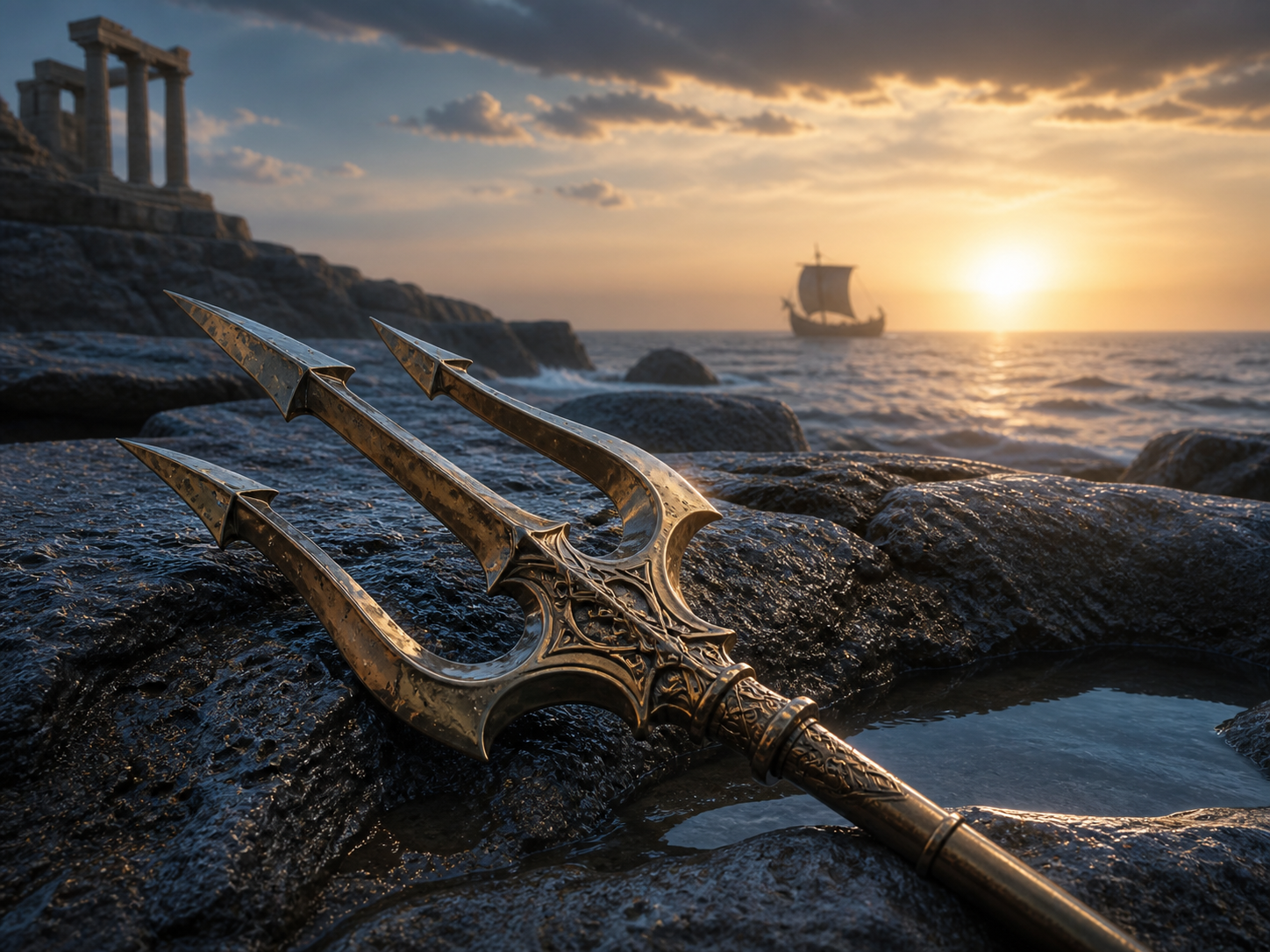
Object reading
Weapon, attribute, and royal sign: it identifies Poseidon instantly. Stories let it break stone, summon springs, disturb the sea, and shake the ground.
Trident, sea power, springs, impact, authority.
Glowing energy, portals, armour, and universal water control.
Poseidon can make the sea navigable or hostile. In narrative terms, geography becomes judgment.
His Earth-shaker title makes solid ground feel as changeable as water.
A trident strike may reveal water, although local versions disagree about whether the gift is fresh, salt, or symbolic.
Equine myths connect him with speed, prestige, fertility, and disciplined force.
The walls of Troy story presents divine labour, a broken bargain, and long memory.
He can oppose cities, heroes, and even other gods, but he remains within a larger divine order.
The unexpected domain
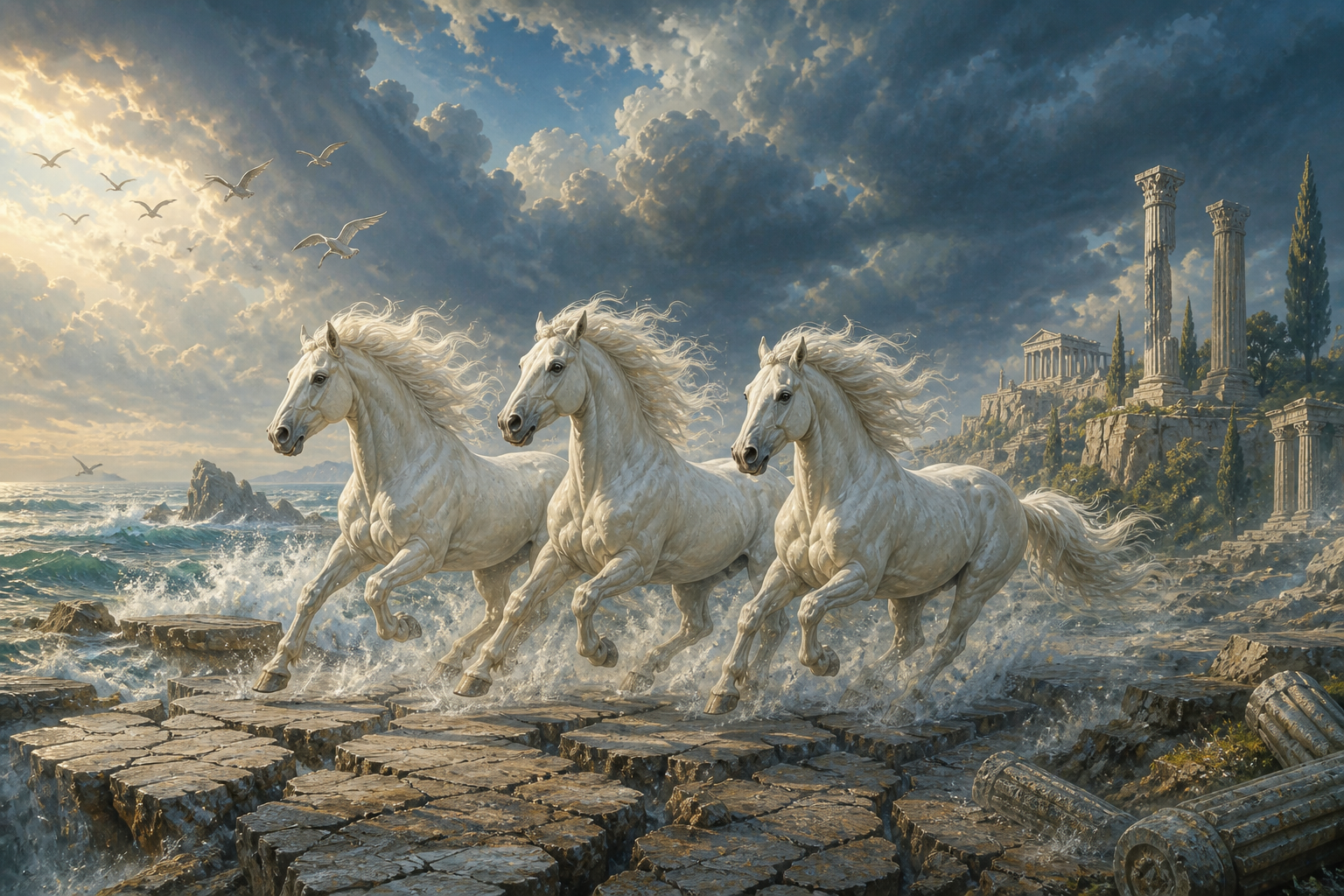
Poseidon Hippios—Poseidon “of horses”—connects the god to breeding, taming, chariots, and the prestige of controlled speed. The pounding of hooves also became a compelling visual analogy for earthquake and surf.
A contest of patronage contrasts Poseidon’s forceful gift with Athena’s civic symbolism. Versions preserve different objects and outcomes.
After Polyphemus is blinded, the sea becomes the medium of Poseidon’s anger and Odysseus’s delayed return.
Divine construction, withheld payment, and remembered insult tie architecture to the god’s sense of honour.
Character over spectacle
Poseidon is powerful, competitive, protective, and dangerous when dishonoured. Yet Fate, Zeus’s senior sovereignty, the action of other gods, agreements, and story circumstance can constrain him. He is neither a simple villain nor a universal hero.
The sea connects worlds. The same sea can keep them apart.